
Introduction
The latest digital advertising trends show automation embedded across the full campaign lifecycle, from creative generation to media buying and measurement. At the same time, consumers are more selective in their purchases and less responsive to generic content.
Let’s explore the latest developments in the field and learn what changes brands should make to adapt.
Trend 1: AI is more deeply integrated in the advertising pipeline
In 2026, AI-driven tools become more deeply involved in the operations of a campaign’s entire lifecycle. It provides ample support across many tasks, including:
- Ideation and creative generation
- Audience modeling and segmentation
- Media buying and bidding decisions
- Real-time performance optimization
- Measurement, attribution, and budget reallocation
With AI and other tech innovations, brands have moved from manually managing each stage to working within semi-automated or fully automated ecosystems. While this shift increases speed and efficiency. Campaigns can be launched faster, optimized continuously, and scaled across multiple channels with minimal manual intervention.
However, automation does not remove the need for strategic control. The quality of outputs still depends heavily on the quality of inputs.
What brands should do?
- Build consented, well-organized first-party data to fuel accurate AI targeting and measurement
- Create modular creative assets (headlines, visuals, CTAs) for dynamic AI-driven personalization and testing
- Choose reliable DSPs with clear visibility into bidding, brand safety, and performance to maintain strategic control
Trend 2: Programmatic advertising remains a much-needed practice
In modern digital advertising, brands need to move fast. Their campaigns are expected to create impacts quickly and at scale while still live. This has created growing demand for unified platforms that measure performance across channels clearly and enable quicker decisions.
Programmatic workflows have become a go-to solution for brands looking to consolidate monitoring, optimization, measurement, and insights in one place. Leading DSPs are now leveraging tech innovations to build themselves up as ecosystems, rather than a collection of tools or channels, that provide transparent, real time performance visibility to drive actions.
What brands should do
- Move toward DSP ecosystems that centralize media buying, cross-channel analytics, audience data, and performance insights in one dashboard to reduce reporting fragmentation
- Prioritize real-time optimization capabilities when selecting partners and workflows

Trend 3: Insight-driven creatives are preferred over AI-generated generic content
With AI, brands can generate thousands of ad variations in minutes, but this scalability does not guarantee impact. Over-reliance on AI-generated content can result in ads that feel generic and fail to connect with audiences
Instead, what continues to set strong creative apart is insight.
Effective creative is built on three fundamentals: cultural context, emotional triggers, and real consumer tensions.
- Cultural context keeps messaging relevant.
- Emotional triggers drive attention and memorability.
- Consumer tensions create urgency and a sense of connection.
Together, these elements require a deep understanding of consumer needs – something AI cannot replicate on its own.
A clear example of this is how brands approached the 2026 Ramadan and Lunar New Year season, both of which fell around the same period in February. The strongest campaigns leaned into shared themes of human connection, family, and homecoming, which reflect what consumers actually care about during this time.
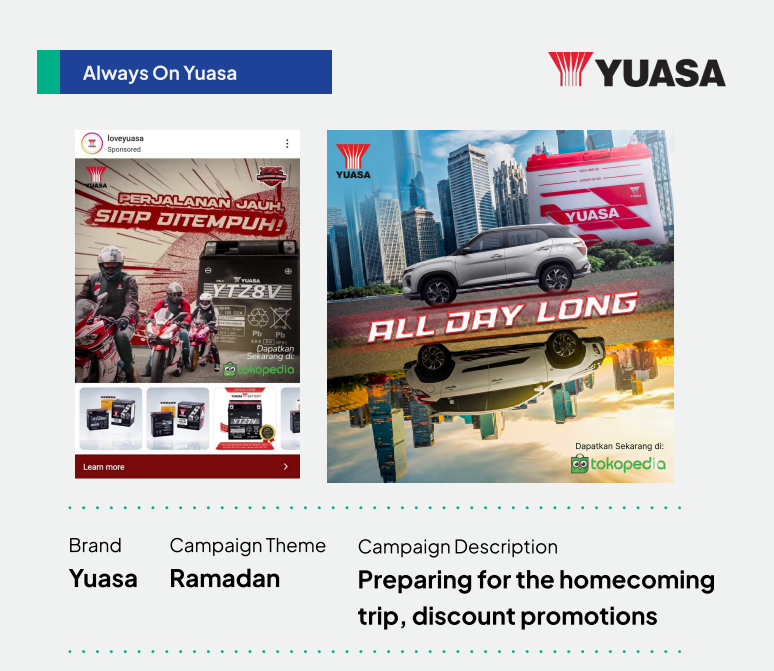
Yuasa, for instance, ran a video ad series highlighting their long-lasting batteries as a reliable companion for long homecoming trips, paired with seasonal promotions. This is a familiar but well-timed message that spoke directly to the occasion.
Read more about Yuasa’s campaign in our exclusive whitepaper here.
Coca-Cola’s Tet campaign in Vietnam took a different approach. Under the theme “Dệt Nên Tết Mới” (“Weave a New Tet”), the campaign invited Gen Z to reimagine family traditions for a new era. The campaign was further extended through a three-episode social film series, each reimagining a classic Tet cultural element through modern storytelling.
What brands should do
- Start campaigns after conducting in-depth research into audience’ behavioral patterns and predictions
- Localize creative designs for key cultural moments to showcase distinct market understanding that adapts to local expectations.
Trend 4: Video, CTV & shoppable ad formats surge
Advertising budgets are increasingly shifting toward video-led environments such as connected TV (CTV), YouTube, live shopping platforms, and shoppable video formats. These channels are able to quickly capture attention, prompt purchases, and scale efficiently.
What brands should do
- Leverage high-impact placements to enhance memorability, such as full-screen placements and non-skippable premium inventory.
- Diversify and adapt formats across diverse channels to maximize reach
- Measure cross-device conversion paths to understand the full impact of multi-channel campaigns.

Trend 5: Influencer marketing remains effective, but requires closer evaluation
Influencer marketing has evolved beyond only driving reach and engagement. It is now a measurable contributor to ad performance and business outcomes.
At the same time, brands are no longer selecting influencers based solely on follower count or engagement rates. Instead, they are looking more closely at actual impact: revenue contribution, lead generation, and customer acquisition. The format itself has also moved from one-off brand mentions toward a full-funnel approach where products are woven naturally into consumer stories.
What brands should do
- Define clear objectives before launching campaigns, which may include conversions, cost per acquisition, revenue contribution, or qualified leads, apart from impressions or engagement metrics.
- Blend influencer content into performance funnels by repurposing influencer assets across paid media channels such as display, social ads, and video placements.

Conclusion
Looking at the prominent digital ads trends in 2026, it is clear that while AI and automation will continue to raise the baseline for speed and scale across the industry, what truly differentiates a brand are genuine consumer understanding, cultural relevance, and the ability to build trust over time. In a landscape where every brand has access to the same technology, insight becomes the real competitive advantage.

0 Comments